Belt marking machine with laser integration
ROS 2 control software, a Gazebo digital twin and a touchscreen interface for a machine that feeds, laser-marks and cuts belts.
- When
- Since 2019
- Origin
- Built at Lazer Market, rebuilt in ROS 2
- Built with
- ROS 2 Humble
- Gazebo
- Raspberry Pi
- Arduino Mega
- PyQt5
- SQLite
- YOLO
- MQTT
- OPC UA
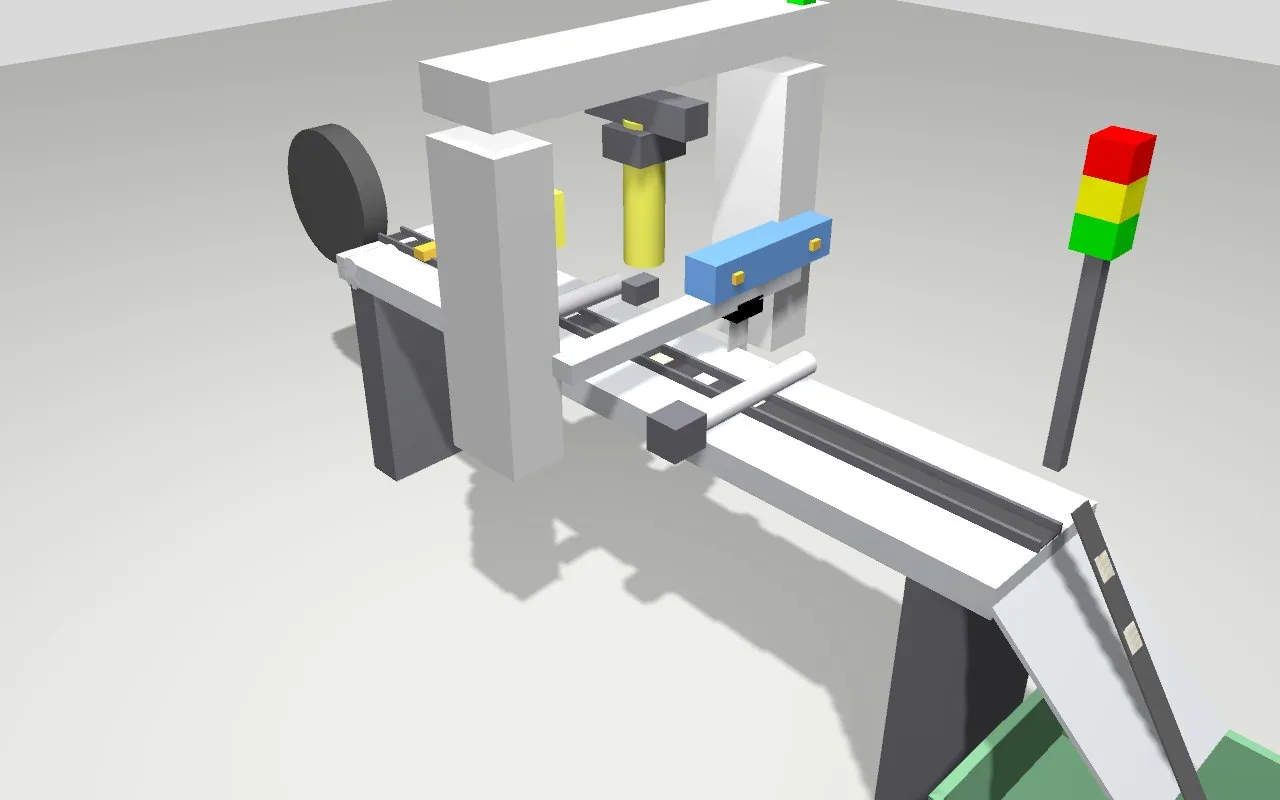
As R&D engineer at Lazer Market I developed a tape-feeding machine that works together with a CO₂ laser. The machine feeds a belt or label tape, triggers the laser to mark it, and cuts it into pieces with a pneumatic knife. This repository is that machine’s control software, rebuilt on ROS 2 with a simulation of the whole process.
It runs on a Raspberry Pi with a touchscreen. An Arduino Mega handles the real-time I/O. The controller never knows whether it drives the real machine or the simulation, because both offer the same ROS service and topic.
What it does
- Four job modes: continuous marking, cut every piece, cut every N labels, cut at the end of a batch.
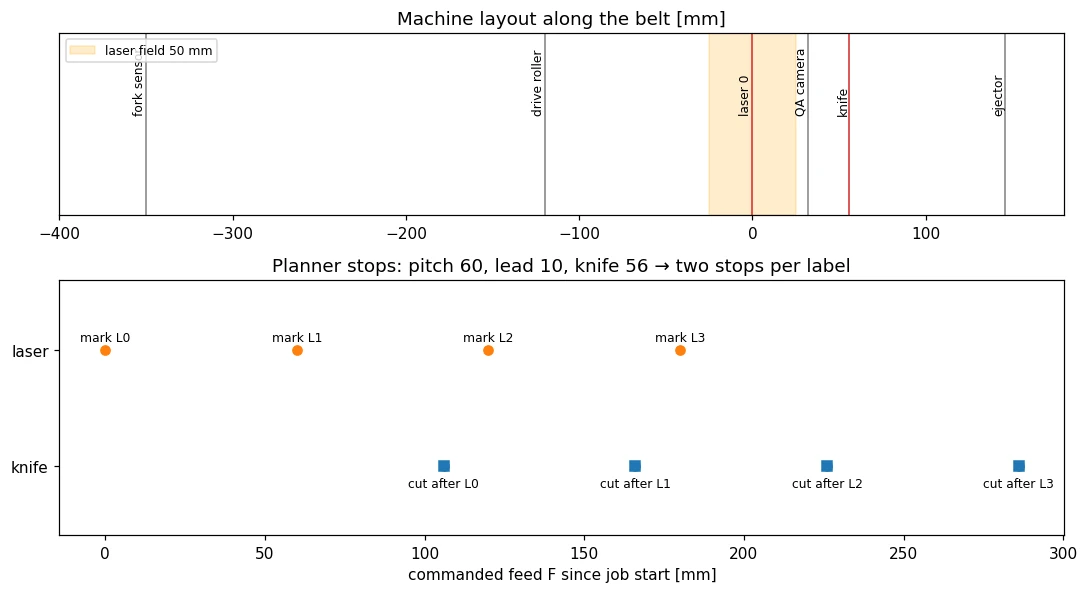
- Up to four laser machines along the belt, each with its own offset and delay.
- A PackML-based state machine with 23 coded alarms, each with a defined reaction and a remedy text.
- Recovery after a laser timeout, knife fault or belt run-out without losing counts.
- Recipes, jobs, production log, alarms and OEE stored in SQLite, with CSV export.
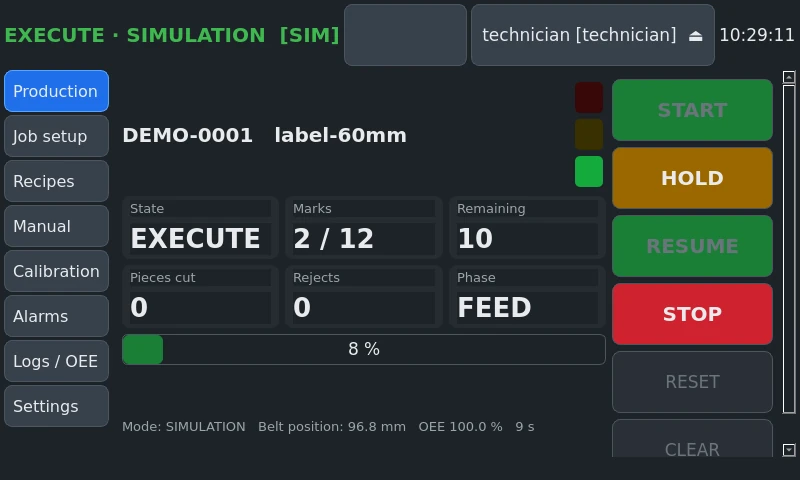
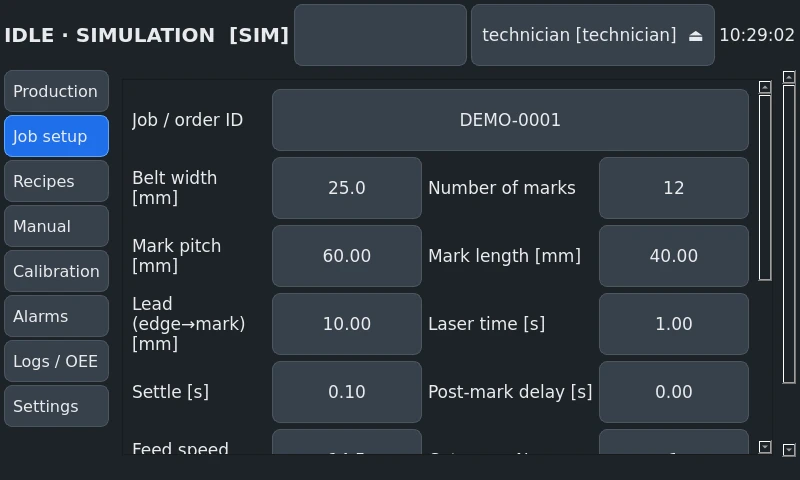
- An 800 × 480 operator interface with PIN roles, in English and Turkish.
Tested in simulation
Twelve scenarios cover normal production, six faults and an eight-hour shift. The simulated shift produced 10,498 labels at 93.6 % OEE with three injected faults. The cycle-time model and the simulation agree within 1.4 to 2.9 %.
An optional camera checks every label with either an OpenCV inspector or a YOLO11n detector trained on synthetic images. All AI parts sit outside the safety path: they report, and the controller decides. Safety functions are hard-wired through a safety relay.